Thank you for always reading The Pocket Times!
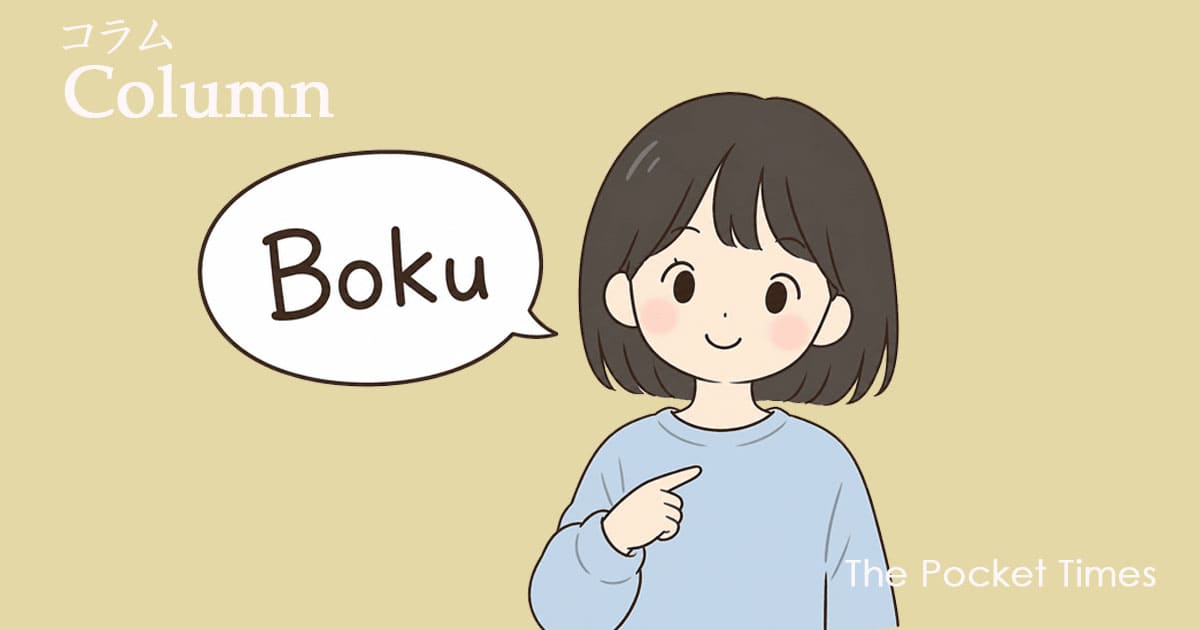
Today, we’re talking about girls who call themselves “boku.”
Let’s take a look at this topic through an interview with Ano(あの).
いつもThe Pocket Timesを見てくださり、ありがとうございます。
今回は、女の子の〈僕呼び〉について取り上げています。僕呼びで有名なタレント「あのちゃん」の、雑誌のインタビューを参考に考えてみましょう。
In Japanese, people often use different words to refer to themselves.
These words can show gender, personality, and even feelings.
日本語では、自分のことを表す言葉がいくつかあります。
それらは性別や性格、さらには気持ちまで表すことがあります。
Most girls use “watashi” or “atashi.”
But some use “boku,” a word that is usually used by boys.
多くの女の子は「私」や「あたし」を使います。
しかし中には、「僕」という、一般的には男の子が使う言葉を選ぶ人もいます。
Do you know any girls around you who call themselves “boku”?
あなたの周りに、自分を「僕」と呼ぶ女の子はいますか?
Japanese entertainer Ano says that calling herself “boku” is not a created persona, but a natural choice. As a child, she felt uncomfortable using more common feminine pronouns and sometimes avoided using any first-person word at all. Although “boku” felt right to her, she stopped using it because of bullying.
タレントの あの さんは、自分を「僕」と呼ぶのは作られたキャラクターではなく、自然な選択だと話しています。子どものころ、彼女は一般的な女性的な一人称に違和感を覚え、ときには自分を表す言葉そのものを避けていたそうです。「僕」がしっくりきたものの、いじめが原因で使うのをやめてしまいました。
In high school, she saw other people freely using their own unique ways of speaking. This gave her the courage to start using “boku” again. Later, some people said it was just a character she created, but she disagreed. Instead, she decided to appear more in the media and make her style more accepted.
彼女は高校生になると、自分らしい言葉づかいをしている人たちを見て、「僕」を再び使う勇気を持つようになりました。その後、「キャラづくりではないか」と批判されることもありましたが、彼女はそれを否定します。むしろメディアに出ることで、自分のスタイルを広く受け入れてもらおうと考えました。
Today, she feels that more people understand her choice. She has even influenced others, including young girls, to choose their own words. She believes that choosing how to refer to yourself—regardless of gender—is meaningful and honest.
現在では、その選択を理解する人も増えてきたと感じており、若い女の子たちが自分に合った言葉を選ぶきっかけにもなっているそうです。性別に関係なく、自分の呼び方を選ぶことには意味があり、正直な自己表現だと彼女は考えています。
Based on her own experience, she hopes that adults will respect children who express themselves in their own way.
彼女は自身の経験をふまえ、子どもたちが自分らしい表現を選んだとき、大人にはそれを尊重してほしいと願っています。
Well, What do you think about girls who use “boku”?
Would you try to correct them, or accept it as their choice?
自分を「僕」と呼ぶ女の子を、あなたはどう思いますか?
直したほうがいいと思いますか?それとも、その人の選択として受け入れますか?
Language is not only about rules—it is also about identity.
言葉はルールだけで決まるものではなく、アイデンティティでもあるのです。
🔑 キーワード
refer to~ ~を指す/~に言及する
pronoun 代名詞
first-person 一人称
gender 性別
identity アイデンティティ
self-expression 自己表現
bullying いじめ
persona[pərˈsōnə(パァソナ)]キャラクター設定
normalize 普通のものにする
influence 影響を与える
individuality[インディヴィジュアリティ] 個性
🔎ポイント
regardless of gender 性別に関係なく
→ “regardless of ~” は「~に関係なく」という意味で、ニュースや少しフォーマルな場面でよく使われます。
例:Everyone should be treated equally, regardless of gender.
(性別に関係なく、すべての人は平等に扱われるべきです。)
ほかに、
regardless of age(年齢に関係なく)
regardless of nationality(国籍に関係なく)
などのように、「of のあとに名詞を置くだけ」で使えます。
🗣️ 自分の意見を言おう
I think people should be free to choose how they refer to themselves.
(人は自分の呼び方を自由に選ぶべきだと思います。)
Using “boku” does not matter as long as it feels natural to the person.
(本人にとって自然なら「僕」を使うことは問題ではないと思います。)
Language should change with society and people’s values.
(言葉は社会や人の価値観とともに変わるべきだと思います。)
I think girls should use “watashi” instead of “boku.”
(女の子は「僕」ではなく「私」を使うべきだと思います。)
It sounds a bit strange to me when girls use “boku.”
(女の子が「僕」を使うと少し違和感があります。)
💭 誰かに質問してみよう
Do you feel comfortable using your usual first-person pronoun?
(自分が普段使っている一人称に違和感はありませんか?)
Have you ever wanted to change the way you refer to yourself?
(自分の呼び方を変えたいと思ったことはありますか?)
Do you think language should follow rules or personal choice?
(言葉はルールに従うべきだと思いますか、それとも個人の選択ですか?)
—
Well, What do you call yourself?
We’ll keep sharing content to support your English learning—no matter who you are.
さて、あなたは自分のことを何と呼びますか?
The Pocket Timesは、どんな人にも役立つ英語学習コンテンツをこれからも届けていきます。
Thank you for learning with The Pocket Times.


コメント