
⭐⭐⭐⭐
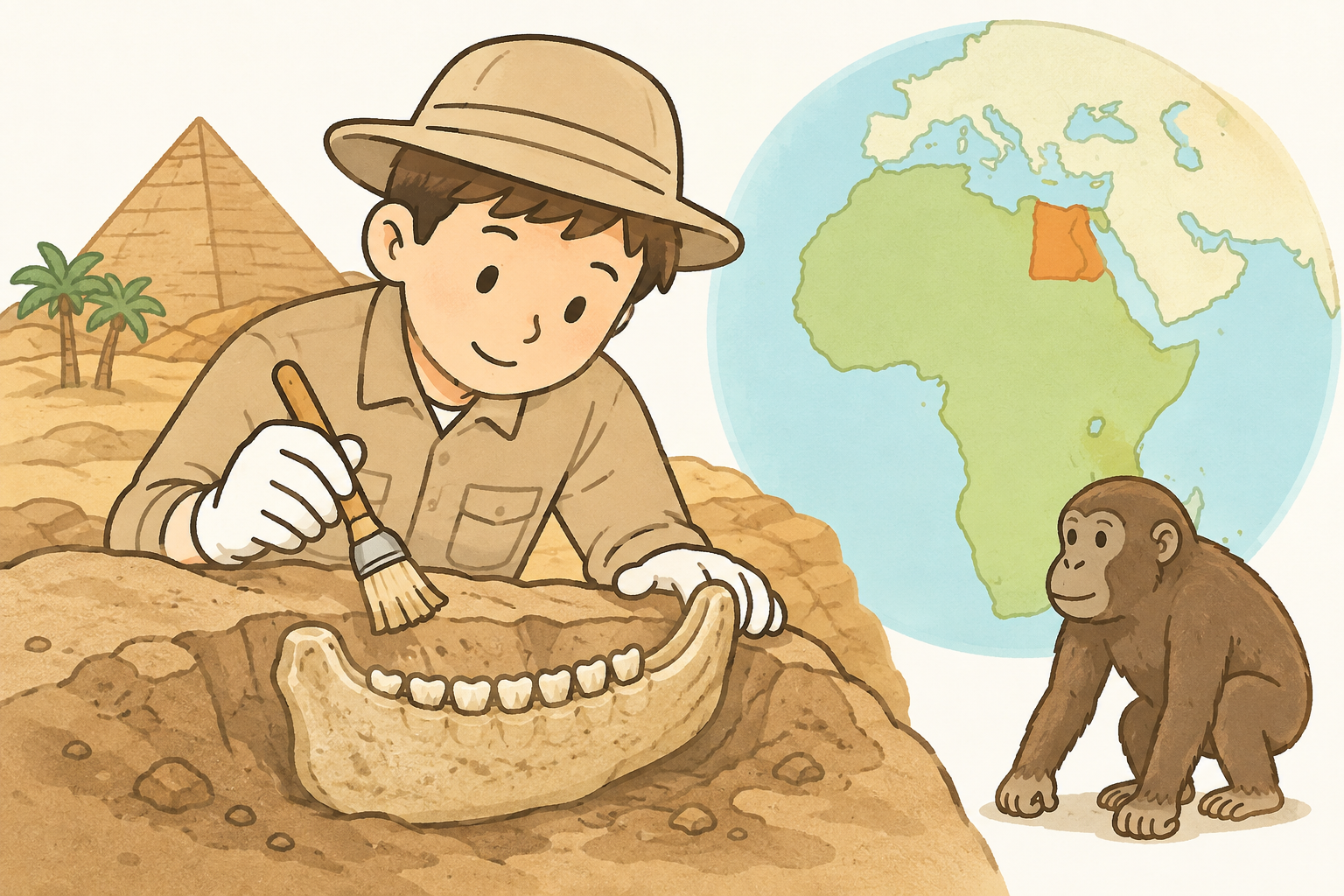
A recently uncovered fossilized jaw fragment in Egypt has been identified as belonging to Masripithecus moghraensis, a newly discovered hominoid species that lived in North Africa around 17 to 18 million years ago. While scientists have long believed that early ape evolution began in East Africa, this remarkable discovery represents the first definitive hominoid fossil ever found in North Africa. The fossil’s dental features suggest that this ancient primate retained many characteristics of the common ancestor shared by modern apes and humans before they spread into Eurasia. As a result, researchers believe North Africa may have been an important center from which early hominoids expanded into Europe and Asia during the Miocene. Published in the journal Science, the study could reshape current palaeoanthropological theories about the origins and migration of early hominoids.
エジプトで新たに発見された下あごの化石は、約1700万〜1800万年前に北アフリカで生息していた新種のヒト上科「マスリピテクス・モグラエンシス」のものだと確認されました。
これまで科学者たちは、初期の類人猿の進化は東アフリカで始まったと考えてきました。しかし今回の発見は、北アフリカで初めて確認されたヒト上科の化石であり、とても重要な成果です。歯の特徴から、この古代の霊長類は、現代の類人猿や人類の共通祖先が持っていた特徴を多く残していたことが分かりました。このことから、初期のヒト上科は中新世に北アフリカからヨーロッパやアジアへ広がっていった可能性があると研究者たちは考えています。
この研究は学術誌『Science』に掲載され、ヒト上科の起源や移動に関するこれまでの学説を見直すきっかけになる可能性があります。
(Sience, National Geographic, etc.)
🔑Keywords キーワード
fossilized [/ˈfɑː.sə.laɪzd/(フォッサライドゥ)] 化石になった
jaw fragment 下あごの破片
→jaw [/dʒɔː/(ジャー)]あご
Masripithecus moghraensis
[/ˌmæs.rɪ.pɪˈθiː.kəs məˌɡreɪˈen.sɪs/(マァスリピセクス マグリエンスィス)]マスリピテクス・モグラエンシス〈学名〉
hominoid ヒト上科(類人猿を含むグループ)
→ hominoid species
unearth 発掘する
definitive [/dɪˈfɪn.ə.t̬ɪv/(ディフィヌィティブ)]決定的な
dental features 歯の特徴
ancient primate 古代の霊長類
retained 保持された
common ancestor 共通祖先
expand into ~へ広がる
Miocene [/ˈmaɪ.ə.siːn/(マイオスィン)]中新世
reshape 作り直す、大きく変える
palaeoanthropological
[/ˌpæl.i.əʊˌæn.θrə.pəˈlɒdʒ.ɪ.kəl/(ペイリオ アンソロポロジカル)]古人類学的な
geographic origin 地理的起源
migration 移動、移住
📌Go-to phrases まる暗記フレーズ
While scientists have long believed that early ape evolution began in East Africa, this remarkable discovery represents the first definitive hominoid fossil ever found in North Africa.
(科学者たちは長い間、初期の類人猿の進化は東アフリカで始まったと考えてきましたが、この重要な発見は、北アフリカで初めて確認された決定的なヒト上科の化石となります。)
have long believed that ~(長い間~と考えてきた)
represent(~を意味する・~に当たる)
the first … ever found(これまでに発見された初めての~)
🗣️Expressions 自分の意見を言おう
I think new fossil discoveries can completely change what we know about history.
(新しい化石の発見は、歴史について私たちが知っていることを大きく変えることがあると思います。)
That’s really interesting, but it’s a little too complicated for me.
(本当に興味深いけど、私には少し難しすぎます。)
Ancient fossils remind us that there is still much to discover about our past.
(古代の化石は、私たちの過去にはまだ多くの謎が残っていることを教えてくれます。)
I wouldn’t want to study fossils myself, but I enjoy hearing about new discoveries.
(自分で化石を研究したいとは思いませんが、新しい発見について聞くのは好きです。)
💭Ask 誰かに質問してみよう
Are you interested in learning about human evolution?
「人類の進化について学ぶことに興味がありますか?」
Why do you think humans first appeared in Africa?
(なぜヒトは最初にアフリカに現れたと思いますか?)
Do you think scientists will find even older human ancestors in the future?
(将来、科学者はさらに古い人類の祖先を発見すると思いますか。)
🔎Pocket View ひとこと
A single small fossil may rewrite the story of our ancestors. Other fossils that have yet to be discovered may also hold big secrets that could change history.
たった一つの小さな化石が、私たちの祖先の物語を書き換えるかもしれません。まだ発見されていない化石の中にも、歴史を変える大きな秘密が隠されているのかもしれませんね。
—
Thank you for learning with The Pocket Times.


コメント